 English
 Arabic

BSA vs FBS: What’s the Difference and When to Use Each
Bovine Serum Albumin (BSA) and fetal bovine serum (FBS) are both bovine-derived reagents used across research and diagnostic workflows, but they serve fundamentally different functions.
BSA is a purified, single-protein preparation with a defined composition and consistent lot-to-lot performance. FBS is a complex biological supplement containing growth factors, hormones, lipids, and transport proteins that support broad cell maintenance.
Selecting the correct reagent depends on the assay context, the level of compositional definition required, and whether reproducibility constraints limit the use of variable biological mixtures.
What BSA and FBS Are
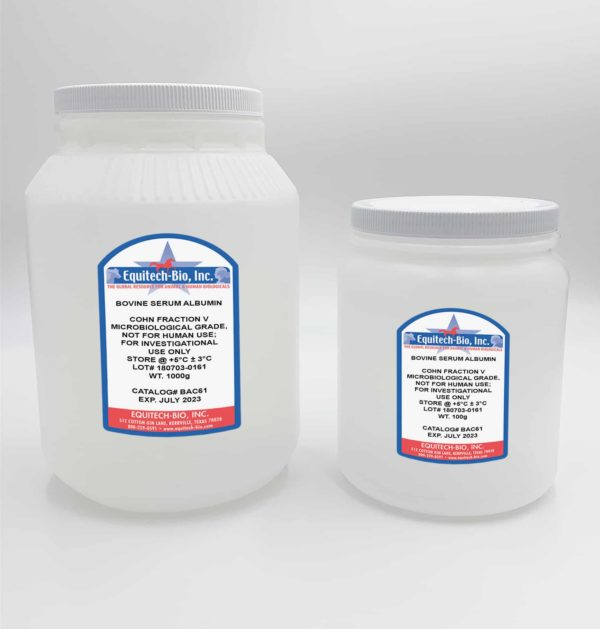
BSA is a purified serum albumin produced by modified Cohn Fraction V precipitation or heat shock fractionation. The result is a single-protein reagent with defined purity, known pH, and predictable functional behavior in assay buffers, blocking solutions, and protein formulations. Available grades include protease-free, fatty acid-free, and diagnostic-grade preparations, providing flexibility across application-specific requirements.
FBS is the liquid fraction of blood collected from bovine fetuses, processed to remove clotting factors and cellular material. It contains a complex, incompletely characterized mixture of proteins, growth factors, hormones, vitamins, lipids, and attachment factors. Its composition varies by lot, collection geography, and processing conditions, introducing inherent biological variability into any workflow that uses it.
Key Differences Between BSA and FBS
Both reagents are derived from bovine sources, but their composition, function, and suitability for application differ substantially.
| Parameter | BSA | FBS |
| Composition | Single protein; defined | Complex biological mixture; incompletely characterized |
| Biological activity | Carrier, stabilizer, blocker | Broad: growth factors, hormones, attachment factors |
| Lot variability | Low; consistent between lots | High; inherent batch-to-batch variation |
| Typical concentration | 0.1–5% w/v in assay buffers | 2–20% v/v in cell culture media |
| Primary use | Assay buffers, blocking, stabilization | Cell culture growth supplementation |
| Documentation | Grade-specific CoA; full traceability | Lot qualification required; origin certification variable |
How BSA Is Used in Research Workflows
BSA functions as a defined, single-protein additive whose properties support applications requiring compositional control and functional specificity.
- Blocking agent: BSA saturates non-specific binding sites in ELISA, Western blot, and immunohistochemistry workflows. Diagnostic-grade, protease-free preparations are selected when background signal reduction is a priority.
- Protein stabilizer: BSA stabilizes enzymes, antibodies, and other labile proteins in solution by reducing surface adsorption and protecting against denaturation. Fatty acid-free preparations are used in lipid-binding assays and kinase studies where lipid interference must be excluded.
- Defined formulations: BSA is incorporated into serum-free and reduced-serum media as a carrier and osmotic stabilizer, replacing the undefined biological activity of serum with a characterized protein at a known concentration
BSA does not replicate the broad biological support provided by FBS. It does not supply growth factors, hormones, or the full complement of attachment signals that FBS contributes to cell culture media.
How FBS Is Used in Cell Culture
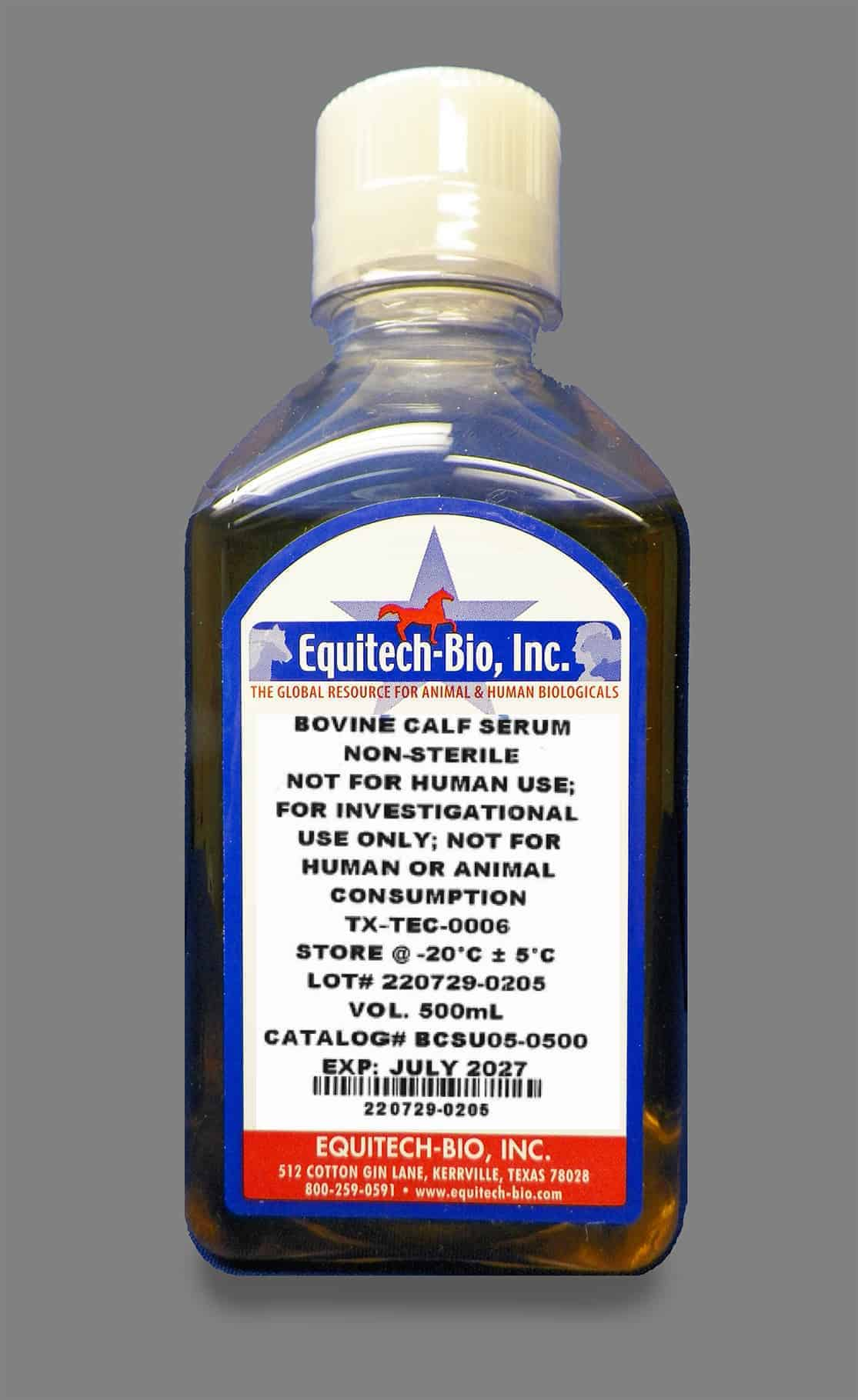
FBS is the standard serum supplement in traditional mammalian cell culture, valued for its broad biological activity.
- Growth support: FBS supplies growth factors, transferrin, and mitogenic signals that most mammalian cell lines require for proliferation. Many validated protocols for immortalized lines and primary cultures were developed and optimized with FBS-supplemented media
- Cell attachment: Fibronectin and extracellular matrix proteins in FBS promote adhesion to culture vessel surfaces, supporting monolayer formation in adherent cultures
- Lot qualification: FBS composition varies between collections. Most laboratories test two to three candidate lots against a reference lot using the target cell line, assessing growth rate, viability, and morphology over several passages before committing to a bulk purchase. This practice protects protocol continuity and reduces experimental drift attributable to reagent change.
Jan van der Valk, in a 2022 commentary in Science, documented that two independent laboratories applying an identical procedure using cells and FBS from the same suppliers obtained substantially different results, with further analysis identifying the FBS lot as a contributing factor.
When to Use BSA Instead of FBS
BSA is appropriate when compositional definition, low lot variability, or the absence of undefined biological activity is a workflow requirement.
| Application | Why BSA Is Preferred |
| Assay buffers | Defined composition; no growth factor activity to confound signal; consistent between lots |
| Serum-free media | Provides osmotic support and carrier function without undefined FBS components |
| Protein handling | Stabilizes labile proteins in storage and dilution buffers without introducing uncharacterized biological activity |
| Diagnostic assay development | Diagnostic-grade BSA supports reproducibility; lot documentation supports regulatory dossier preparation |
| Lipid-binding studies | Fatty acid-free BSA eliminates lipid interference from binding and receptor activation assays |
When to Use FBS Instead of BSA
FBS is appropriate when cells require broad biological support that a purified single-protein preparation cannot provide.
| Application | Why FBS Is Preferred |
| Primary cell culture | Primary cells require growth factors and attachment factors present in FBS that BSA does not supply |
| Legacy protocol compliance | Validated cell line protocols optimized around FBS-supplemented media require full revalidation before substitution |
| Hybridoma production | Hybridoma cells are routinely maintained in FBS-supplemented media supporting both growth and antibody secretion |
| Cell line establishment | New cell line adaptation relies on the complex biological signals of FBS during initial passage |
Liu et al., in a 2023 publication in Scientific Reports, confirmed that FBS lot variation measurably affects cell proliferation and experimental outcomes, reinforcing pre-qualification as a standard quality control step before initiating a new experimental series.
Selection Factors for BSA and FBS
Reagent selection should be guided by the specific technical and regulatory requirements of the application.
| Factor | Consideration |
| Purity grade | Match BSA grade to assay sensitivity: microbiological, reagent, diagnostic, protease-free, or fatty acid-free |
| Endotoxin level | Confirm endotoxin specification on the CoA before use in cell-based or immunological assays |
| Sterility and testing | FBS requires sterility and mycoplasma confirmation; BSA requires purity and activity confirmation appropriate to grade |
| Lot consistency | BSA manufacturing supports high lot-to-lot consistency; FBS requires pre-qualification of each new lot |
| Origin documentation | Institutional or regulatory protocols may require FBS origin certification; confirm at procurement |
Equitech-Bio, Inc. supplies BSA across all major grades under USDA oversight and ISO 13485:2016-certified quality management processes, with full traceability from source material to finished product and certificate-of-analysis documentation for each lot.
Common Misconceptions to Avoid
Two misconceptions arise consistently when researchers evaluate BSA and FBS for the same application.
| Misconception | Clarification |
| BSA and FBS are interchangeable because both are bovine-derived | Bovine origin is the only shared attribute. Substituting one for the other requires full experimental revalidation |
| BSA is simply diluted serum | BSA is a manufactured protein preparation produced through controlled fractionation, not a diluted or simplified form of serum |
Conclusion
BSA and FBS address different needs within research and diagnostic workflows. BSA provides defined composition, grade-specific purity, and consistent lot performance for assay buffers, blocking applications, protein stabilization, and serum-free formulations. FBS provides complex biological activity that supports cell growth and attachment in traditional culture systems, at the expense of inherent lot-to-lot variability.
Equitech-Bio supplies BSA across multiple grades and processes, including modified Cohn Fraction V and heat shock preparations, supporting the full range of research and diagnostic applications that require a defined albumin source. For applications requiring human serum albumin as a species-specific alternative, Equitech-Bio offers a range of confirmed human albumin products, well-positioned for research and in vitro diagnostic use.
FAQ
Can BSA replace FBS in cell culture media?
Not directly. BSA lacks the growth factors and hormones that FBS provides. Protocol revalidation is required before substituting BSA for FBS.
Why is FBS more variable than BSA?
FBS is harvested, not manufactured. Composition varies by animal, geography, and processing conditions. BSA fractionation produces defined, consistent lot specifications.
Is BSA used in serum-free media?
Yes. BSA functions as a carrier and osmotic stabilizer in serum-free formulations. Fatty acid-free and protease-free grades are commonly used.
How should I choose between BSA and FBS?
Match the reagent to the function. Use BSA for defined buffers. Use FBS for broad biological support in traditional culture.
 English
 Arabic