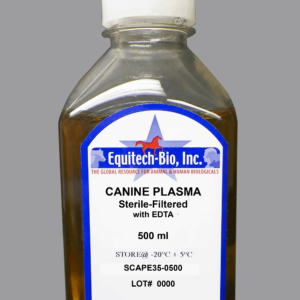
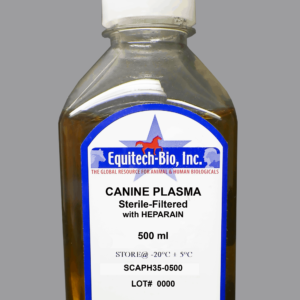
The form of canine plasma that arrives determines what you can do with it. That’s not a storage detail. It’s a scientific variable.
Fresh frozen plasma preserves labile clotting factors, including Factor VIII and von Willebrand factor, by freezing within hours of collection. Once thawed, thawed plasma loses that labile factor activity quickly, which is why “canine frozen plasma” and “fresh frozen plasma” aren’t interchangeable terms for the same product in any protocol that depends on coagulation factor integrity.
Refrigerated canine plasma suits applications where labile factor preservation isn’t the requirement, but protein content, albumin concentration, and colloid osmotic pressure support still are. In veterinary medicine research, this distinction maps directly onto clinical use cases: plasma transfusion protocols, albumin replacement studies, and continuous rate infusion models all place different demands on the plasma fraction being evaluated.
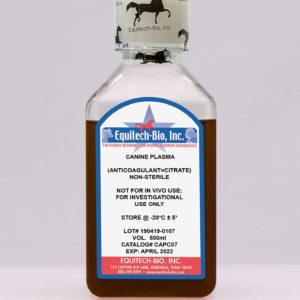
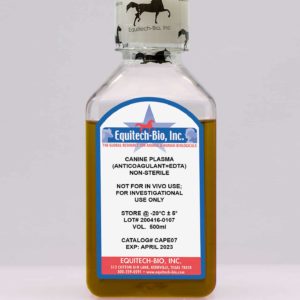
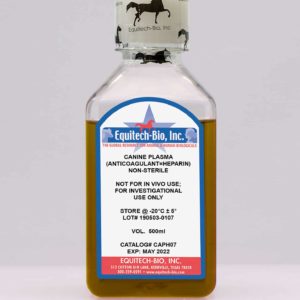
Equitech-Bio supplies canine plasma products processed from controlled collections to preserve protein integrity across these application categories. If your research involves plasma derivatives, coagulation biology, or species-matched canine model work, the material you start with shapes every result downstream.
Canine plasma is the protein-rich, cell-free liquid component of canine whole blood, isolated after anticoagulant treatment and centrifugation. It contains albumin, immunoglobulins, coagulation factor proteins, other clotting factors, and transport molecules. It is the biologically complete fluid fraction of canine blood, retaining components that canine frozen plasma and serum-based preparations handle differently depending on processing.
Canine plasma products support coagulation biology research, species-matched immunoassay development, and veterinary medicine studies evaluating plasma transfusion protocols and albumin replacement therapies. Fresh-frozen plasma and refrigerated canine plasma are used as reference materials for diagnostic validation and plasma derivatives research. Labs working with canine models pair plasma with rat serum albumin and chicken serum albumin for cross-species protein panels.
Canine plasma is collected before clotting and retains fibrinogen, active clotting factors, and coagulation factor proteins. Serum is the fluid remaining after clotting has occurred and those factors have been consumed. For colloid osmotic pressure studies, continuous rate infusion modeling, or any application where coagulation factor activity is required, plasma is the appropriate fraction. Serum is not a substitute.
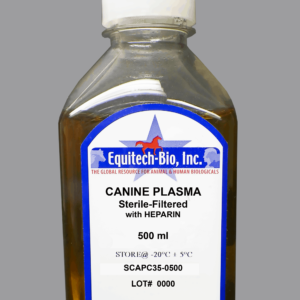
Canine plasma products supplied by Equitech-Bio are processed for research use. Fresh-frozen plasma and refrigerated canine plasma are sterile-filtered to remove microbial and particulate contamination while preserving albumin, immunoglobulins, and clotting factors. For species-matched research panels, canine plasma works alongside goat serum albumin for blocking and calibration applications. Research use only.
 English
 Arabic

 English
 Arabic