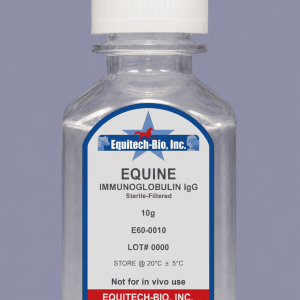
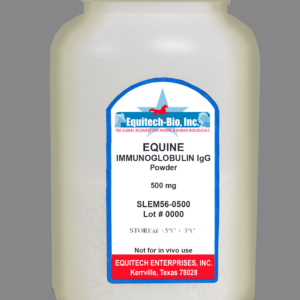
Foal IgG levels in the first hours of life determine whether a neonatal foal survives its first weeks. Newborn foals are born without circulating immunoglobulins and depend entirely on absorbing the mare’s colostrum to acquire passive immune protection. When a foal fails to nurse adequately or premature lactation depletes colostrum quality before birth, IgG concentration in the foal drops below the threshold needed to resist bacterial infections.
IgG testing within the first 24 hours of life is standard veterinary practice precisely because low IgG levels identified early can still be corrected. The SNAP foal IgG test and laboratory-based quantification methods both depend on equine IgG reference standards that deliver accurate results across the concentration range relevant to passive transfer failure diagnosis. An adequate amount of reference-grade foal IgG in the calibration curve is what makes those results clinically actionable rather than directionally suggestive.
Bovine IgG serves a parallel reference role in bovine neonatal passive transfer research, but equine systems require equine-matched standards. Absorb immunoglobulin studies evaluating gut permeability and IgG levels in neonatal foals benefit from reference material that reflects the actual immunoglobulin profile of the species being studied.
For avian cross-species panel applications, chicken IgY polyclonal antibody and human IgG antibodies extend immunoglobulin reference coverage across species. Research use only.
 English
 Arabic

 English
 Arabic