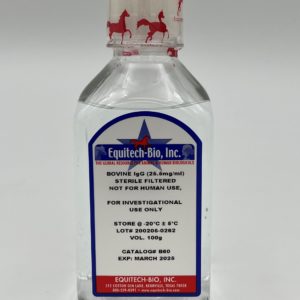
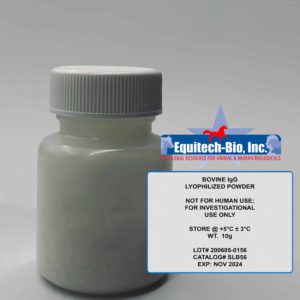
Bovine immunoglobulins are the primary antibody class of the bovine immune system, present in high concentrations across bovine serum, bovine plasma, and bovine colostrum. They carry effector functions, including pathogen neutralization, opsonization, and complement activation, that make them biologically active proteins, not passive matrix components.
Purified bovine IgG is isolated from bovine serum or colostrum by fractionation and DEAE chromatography, yielding a preparation with defined protein concentration and documented immunoglobulin content. Goat IgG and normal bovine IgG serve parallel roles as isotype controls and reference standards in species-matched assay calibration, but the distinct biochemical profile of bovine immunoglobulins makes direct substitution between species a variable you need to account for explicitly.
Immune whey and bovine colostrum are natural sources of bovine IgG used in nutritional and gut health research evaluating passive immune transfer and bovine IgA alongside IgG fractions. In laboratory applications, purified bovine IgG functions as a reference standard, coating antigen, and isotype control in ELISA and western blot workflows. Research involving Escherichia coli neutralization assays and dietary supplements efficacy studies also draws on bovine immunoglobulin preparations as both target and reference material.
For cross-species immunoglobulin panels, bovine IgG works alongside mouse IgG antibody and goat anti human IgC polyclonal antibody detection reagents. Research use only.
 English
 Arabic

 English
 Arabic