 English
 Arabic

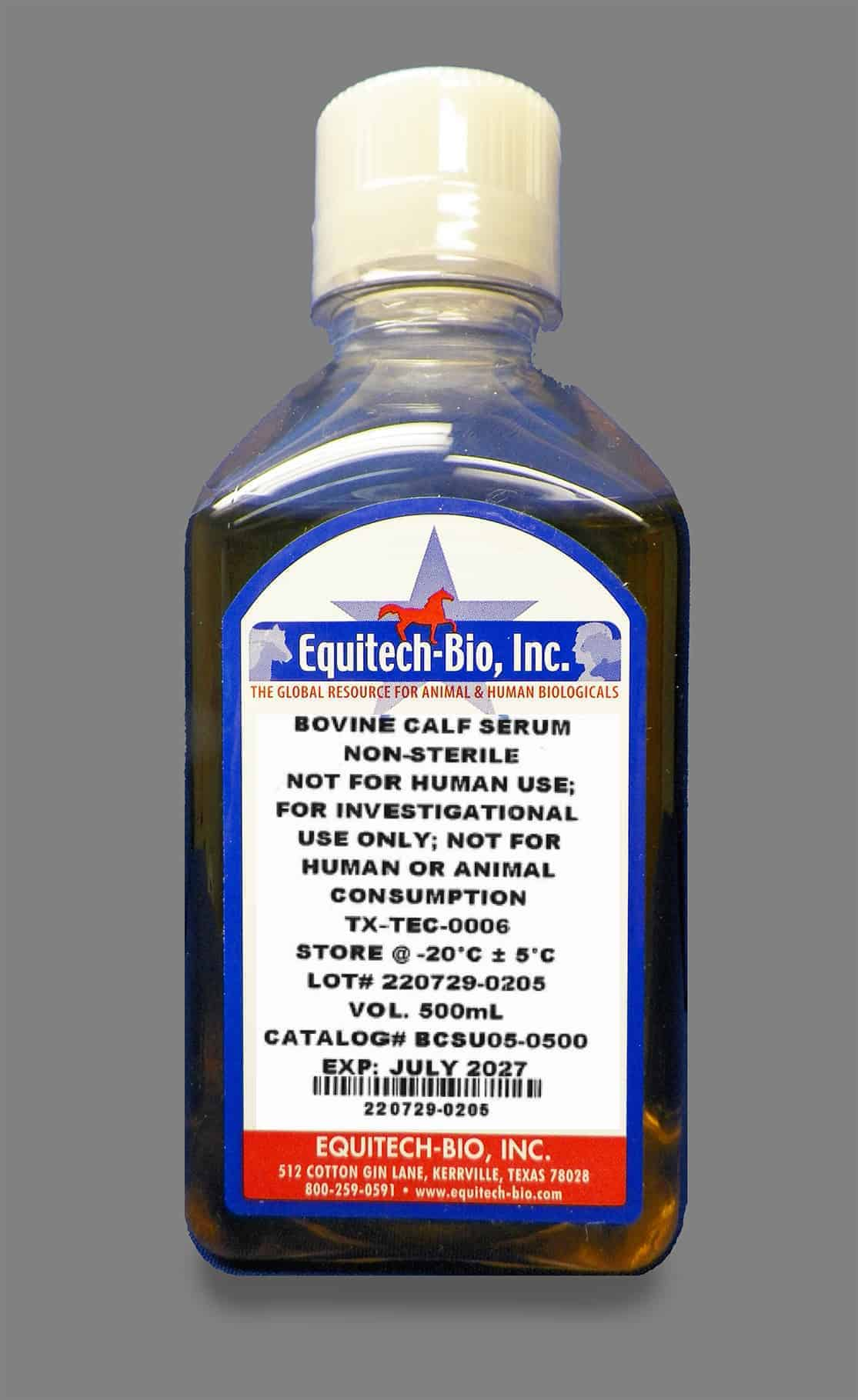
Plasma vs. Serum: What’s the Difference?
Plasma and serum are both liquid fractions of blood. Still, they are not the same material, and selecting the wrong one for your application can affect assay performance and data reliability. Plasma is collected before clotting occurs and retains fibrinogen and other coagulation proteins; serum is the fluid that remains after blood has clotted, which means those proteins are consumed or removed in the process.
Understanding this biochemical distinction is the starting point for consistent selection of biological material across research and diagnostic workflows. Choosing correctly depends on your target analyte, your assay design, and whether coagulation proteins are relevant to your application.
What Is the Difference Between Plasma and Serum?
Plasma and serum both come from whole blood, but their protein compositions differ depending on when and how they are separated. The key distinction is coagulation: plasma is collected before clotting, and serum is collected after.
| Serum | Plasma | |
| Definition | Fluid remaining after blood has clotted and clot/cells are removed | The liquid portion of anticoagulated blood after the cells are removed |
| Fibrinogen | Absent (consumed during clotting) | Present |
| Coagulation factors | Largely absent | Retained |
| Anticoagulant used | None | Yes (EDTA, heparin, or citrate) |
| Represents circulating blood | Post-coagulation state | Pre-coagulation state |
| Common applications | ELISA, antibody work, cell culture, immunoassay validation | Coagulation studies, biomarker research, cytokine detection |
Human serum is commonly used in applications where anticoagulants would interfere with detection chemistry, including many ELISA formats and immunoassay validation workflows. Human plasma retains fibrinogen and other labile proteins generated during the clotting process. cascade, making it an appropriate matrix for coagulation studies and workflows that require a complete circulating protein profile.
According to Physiology, Blood Plasma, published on StatPearls on NCBI Bookshelf, plasma accounts for approximately 55% of total blood volume and contains proteins, including albumin, globulins, and fibrinogen, at concentrations of approximately 6 to 8 g/dL.
How Serum and Plasma Are Collected
The collection process determines what proteins are present in the final product. Both matrices begin with whole blood, but handling diverges immediately depending on whether coagulation is permitted or inhibited.
| Parameter | Serum | Plasma |
| Collection tube | Plain tube or serum separator tube | Anticoagulant-treated tube |
| Post-collection handling | Allow full clot formation at room temperature. | Gentle inversion to distribute anticoagulant |
| Centrifugation | After complete clotting | After the anticoagulant has taken effect |
| Common anticoagulants | None | K2 EDTA, K3 EDTA, lithium heparin, sodium heparin, sodium citrate |
| Key variable affecting quality | Clotting time and temperature | Anticoagulant type and compatibility with downstream assay |
| Proteins retained | Immunoglobulins, albumin, non-coagulation proteins | All serum proteins, plus fibrinogen and coagulation factors |
Serum preparation requires adequate clotting time at room temperature before centrifugation. Insufficient clotting time can result in fibrin carry-over in the separated fraction, affecting downstream assay results.
For plasma, the three most widely used anticoagulants each have distinct compatibility profiles: EDTA chelates calcium ions and is suited to protein and genomic work; heparin inhibits thrombin and factor Xa but may interfere with certain PCR-based detection systems; and sodium citrate is standard for coagulation studies where factor measurement is the primary objective.
Available formats from Equitech-Bio, Inc. include donkey serum and human plasma variants with K2 EDTA, K3 EDTA, lithium heparin, sodium heparin, and sodium citrate anticoagulants, all confirmed on the live product catalog.
How to Choose Between Plasma and Serum for Research
The target analyte, assay design, and anticoagulant compatibility should drive matrix selection. Neither matrix is universally preferable; the correct choice depends on the specific research or diagnostic context.
| Selection Factor | Prefer Serum | Prefer Plasma |
| Anticoagulant interference | When anticoagulants disrupt the assay | No concern |
| Coagulation protein measurement | Not appropriate—fibrinogen absent | Appropriate |
| Cytokine or biomarker detection | Acceptable, but a non-specific background may be elevated. | Lower non-specific background, particularly for low-abundance analytes |
| Proteomics and multi-analyte panels | Confirm matrix comparability | Generally preferred |
| Assay validation history | When the assay has been validated against serum | When validated against plasma |
Research published in Immunologic Research by Holden T. Maecker, Department of Microbiology and Immunology, Stanford University School of Medicine, concluded that “plasma is a more sensitive matrix for detecting changes in certain low-abundance cytokines” than serum in multiplex immunoassay formats, attributed in part to elevated non-specific background in serum resulting from platelet activation during clotting.
Beyond matrix type, the sourcing and processing parameters of the biological material directly affect assay performance. Key factors to verify when selecting serum or plasma for research or diagnostic use include:
- Species and donor origin
- Sterility status (sterile filtered or unfiltered)
- Anticoagulant type for plasma products
- Screening status (STD-negative for human-derived materials)
- Lot size and batch-to-batch consistency
- Storage format and cold chain documentation
Rat serum albumin and the broader Equitech Bio albumin range are available for matrix-matched assay controls and calibration workflows. All products are supplied for research use and in vitro diagnostic use only.
Researchers should match the product matrix to the protocol requirements before ordering and request a reserve sample where lot verification is required before commitment.
Contact Equitech-Bio at sales@equitech-bio.com or 800-259-0591 to discuss specifications and availability.
Conclusion
Plasma and serum differ primarily in their coagulation protein content, and that biochemical distinction determines which matrix is appropriate for a given application.
Serum is suitable for assays where anticoagulants would interfere and where fibrinogen is not required; plasma is the appropriate choice when coagulation proteins are relevant or when a lower nonspecific background is needed for sensitive cytokine or biomarker detection. Lot consistency, documentation, and species specificity are equally important selection criteria regardless of matrix type.
Equitech-Bio, Inc. supplies research-grade serum and plasma products across a wide range of species and anticoagulant formats, all produced under USDA oversight and ISO 13485:2016-certified quality management processes, for research and in vitro diagnostic use only.
FAQ
Are serum and plasma the same?
No. Both derive from whole blood, but serum is collected after clotting and lacks fibrinogen and most coagulation factors. Plasma is collected before clotting and retains them.
Is plasma also called serum?
No. Plasma and serum are distinct fractions with different protein compositions. The terms are not interchangeable in research or diagnostic contexts.
Can we convert plasma to serum?
Not in practice. Activating coagulation in plasma would consume fibrinogen and coagulation factors, but the resulting material would not be equivalent to serum collected under standard conditions.
Which is better for testing, serum or plasma?
Neither is universally preferable. Serum suits assays where anticoagulants interfere. Plasma is appropriate when coagulation proteins are relevant or when a lower background benefits low-abundance analyte detection.

 English
 Arabic