 English
 Arabic

What Is Albumin? Understanding Its Structure, Properties, and Laboratory Role
Albumin is the most abundant protein in blood plasma and a staple reagent in research laboratories. You rely on it to stabilize enzymes, block nonspecific binding, and supply nutrients to cultured cells. Understanding how the protein folds helps you choose the right grade for each application.
In this guide, you will learn how albumin’s structure gives rise to its most useful properties. You will also see how researchers apply it across assays, cell culture, and protein studies. Finally, you will discover what to check before you order albumin for your next project.
Albumin Structure: How One Chain Folds Into Three Domains
The albumin protein is a single polypeptide chain that folds into a compact, heart-shaped structure. Human serum albumin (HSA) contains 585 amino acids and has a molecular weight of 66.5 kilodaltons. Bovine serum albumin (BSA) shares a closely related fold, so both proteins serve similar roles in many workflows.
The chain arranges itself into three homologous domains, labeled I, II, and III. Each domain then splits into two subdomains, A and B, built from alpha helices.
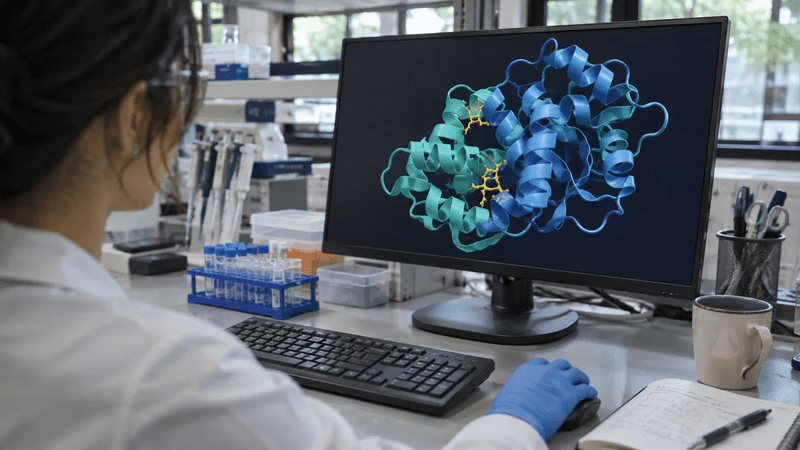
Seventeen disulfide bridges hold these helices in place and give the molecule its notable stability. In addition, one free cysteine residue, Cys34, offers a reactive thiol group for conjugation and antioxidant activity. As a result, albumin tolerates the heat shock processing that manufacturers use to purify it from blood.
Hydrophobic pockets within the subdomains form binding sites for fatty acids, hormones, metals, and drugs. For example, according to a crystallography study, equine albumin from Equitech-Bio binds a cytotoxic lipid differently than human albumin. Because binding behavior varies by species, you should match the albumin source to your experimental model.
Key Properties That Shape Laboratory Performance
Albumin’s structure translates into several properties that make the protein useful at the bench. The protein dissolves readily in water and stays stable across a broad range of pH conditions. Moreover, its net negative charge at neutral pH helps it remain soluble at high concentrations.
Purification methods also shape how a given albumin product performs in your specific application. When you compare products, pay close attention to the following characteristics on each technical data sheet:
- Heat shock and modified Cohn Fraction V purification each produce albumin with distinct purity and performance profiles.
- Protease-free grades minimize residual enzyme activity that could degrade antibodies or other sensitive proteins.
- Fatty-acid-free and low-endotoxin options suit cell culture and binding studies that demand cleaner backgrounds.
Format matters too, since albumin ships as a dry powder or as a ready-to-use sterile solution. Powders offer long shelf life, while solutions save preparation time and reduce weighing errors. Therefore, you should review purity, processing method, and format together before you finalize an order.
How Researchers Use Albumin Across Common Workflows
Albumin function in the lab spans dozens of techniques, from simple dilutions to complex cell-based assays. In enzyme-linked immunosorbent assays (ELISA) and Western blots, you use it to block unoccupied binding sites. Consequently, your detection antibodies bind their targets with less background noise and fewer false signals.

Albumin also serves as a reference standard for protein quantification methods such as the Bradford assay. In cell culture, it carries lipids, hormones, and trace elements to cells growing in serum-free media. Similarly, it binds nonspecific toxic compounds and reduces shear stress inside bioreactor systems.
Researchers also study albumin directly, comparing how albumins from different species interact with cells and receptors. According to a renal transport study, the investigators sourced porcine, rabbit, and sheep albumins from Equitech-Bio.
Your choice between species depends on whether your model is human, rodent, or livestock. For instance, you can weigh HSA against BSA when your assay must reflect human biology closely. Meanwhile, BSA suits most routine workflows thanks to its lower cost and broad availability.

Source the Right Albumin for Your Next Project
Albumin supports your lab work through a stable structure, flexible binding, and dependable solubility. When you understand those traits, you can match each grade to the assay in front of you. Careful selection saves you time, protects your samples, and keeps your results reproducible across experiments.
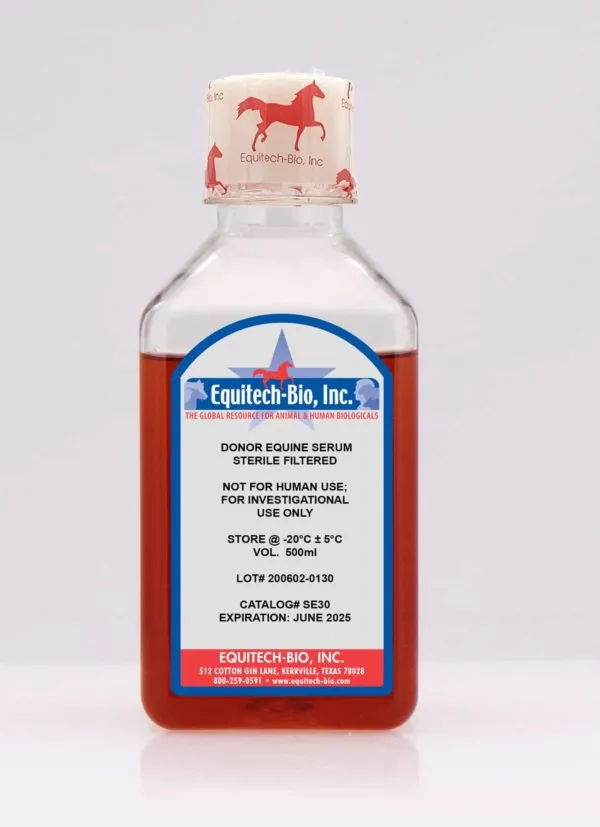
Texas-based Equitech-Bio offers a full line of albumins from multiple species in both powder and solution formats. Our team can help you compare heat shock, Fraction V, and protease-free grades for your workflow. Reach out to our team today to request a reserve sample of the albumin grade your research needs.
Frequently Asked Questions About Albumin
Researchers often ask the same handful of questions about how albumin works and how to choose it. The answers below cover the topics that come up most often during product selection. Use them as a quick reference whenever you plan your next albumin purchase.
What Is Albumin, and How Is It Structured?
Albumin is a single chain of amino acids folded into three domains and held together by disulfide bonds. HSA contains 585 amino acids, while BSA contains 583 amino acids in a closely related arrangement.
What Is the Difference Between HSA and BSA?
HSA comes from human plasma, while BSA comes from cattle and costs less to source in bulk. You can choose HSA for human-relevant studies and BSA for routine blocking, standards, and cell culture.
Which Albumin Grade Should You Use for ELISA?
Protease-free BSA works well as an ELISA diluent or blocking agent because it limits unwanted enzyme activity. Always confirm the technical data sheet, since endotoxin and fatty acid levels can also affect results.
 English
 Arabic