 English
 Arabic

Chicken Egg Albumin: Lab Applications vs Food Science Uses
Chicken egg albumin serves two distinct purposes depending on where it ends up. In a research laboratory, it functions as a model antigen, protein standard, or blocking reagent, selected based on defined purity, documented lot performance, and application-specific grade.
In food science, that same material earns its place through the gelation, foaming, and emulsification behavior it brings to processed food systems. The grade, documentation, and sourcing criteria governing each context are not transferable between them.
Getting this distinction wrong carries real consequences for both experimental integrity and regulatory compliance.
What Is Chicken Egg Albumin?
Chicken egg albumin, egg albumen, and ovalbumin are related but not interchangeable terms. “Egg albumen” refers to the whole egg white, the aqueous fraction surrounding the yolk. Egg albumin describes the protein content of that fraction as a functional or commercial material. Ovalbumin is the dominant individual protein in egg white, accounting for roughly 54% of total egg white protein by weight, with a molecular weight of 45 kDa and an isoelectric point of 4.5.
The full protein picture is considerably more complex than that of ovalbumen alone. Chicken egg white contains ovotransferrin (12%), ovomucoid (11%), ovoglobulins (8%), ovomucin (3.5%), and lysozyme (3.5%), along with minor proteins including ovoinhibitor, ovoglycoprotein, and avidin.
As Abeyrathne et al. confirmed in a review published in Poultry Science, each of these proteins has distinct functional properties, meaning that whole egg white preparations and purified ovalbumin behave differently across both food and analytical contexts.
Why Chicken Egg Albumin Is Used in Laboratories
Chicken egg albumin and purified ovalbumin are established reagents in biochemical and immunological research. Their well-characterized structure, availability at commercial scale, and documented behavior across multiple assay formats make them practical choices for a range of applications.
- Protein standards: The defined molecular weight of ovalbumin at 45 kDa makes it a reliable marker in SDS-PAGE and other electrophoretic separations. Its characterized physicochemical properties also support use as a reference protein in quantification assays where a known standard is required.
- Blocking agents: Egg albumin saturates non-specific binding sites in ELISA and immunoassay formats, reducing background signal without interfering with target detection.
- Model antigens: Among naturally derived antigens, ovalbumin is among the most widely used in immunological research. Its mild immunogenicity, well-mapped T cell and B cell epitopes, and availability as a defined preparation make it a standard tool for studying antigen-specific immune responses, vaccine formulation, and allergy models in murine systems.
- Assay support: Purified ovalbumin supports protein-protein interaction studies, conjugation to haptens or other antigens, and structural studies of serpin-family proteins.
Laboratory applications require documented purity, defined protein composition, confirmed lot consistency, and grade-appropriate certificates of analysis. Food-grade or technical-grade materials do not meet these requirements without independent characterization.
How Chicken Egg Albumin Supports Food Science
Egg albumin contributes to structure, texture, and protein content in food systems through functional mechanisms that are closely tied to its protein composition and the specific processing conditions applied.
| Functional Property | Mechanism | Representative Applications |
| Foaming and aeration | Ovalbumin and ovoglobulins form stable air-liquid interfaces under mechanical agitation | Meringues, soufflés, marshmallows, aerated confections |
| Heat-set gelation | Thermal denaturation above approximately 80°C causes protein unfolding and irreversible network formation | Baked goods, processed meat products, heat-set protein gels |
| Emulsification support | Ovotransferrin and ovalbumin stabilize oil-water interfaces | Dressings, sauces, and emulsified processed foods |
| Protein enrichment | High biological value protein with a complete amino acid profile | Functional foods, protein-fortified beverages, sports nutrition |
Food science applications typically use dried egg white powder or spray-dried egg albumin preparations. Functional performance depends heavily on processing history, pH, and ionic conditions. Research-grade purity specifications and lot traceability documentation are not standard requirements in food ingredient sourcing.
Lab Applications vs Food Science Uses: Key Differences
The same protein source gets evaluated against very different criteria depending on the intended use.
| Parameter | Laboratory Use | Food Science Use |
| Purpose | Defined reagent for analytical, immunological, or biochemical applications | Functional ingredient for structure, texture, or protein content |
| Purity requirement | Defined; grade-specific (research, diagnostic, or analytical) | Functional; based on food-grade specifications |
| Documentation | Certificate of analysis, lot number, purity by SDS-PAGE | Food safety certification, allergen declaration, compositional data |
| Lot variability tolerance | Low; consistency between lots is a procurement requirement | Moderate; performance evaluated against functional criteria |
| Regulatory framework | Research use only; institutional biosafety requirements apply | Food safety regulations; allergen labeling requirements apply |
| Interchangeability | Food-grade material cannot substitute for research-grade material without validation | Research-grade material is not positioned or regulated for food use |
Factors That Affect Chicken Egg Albumin Performance
Performance varies considerably with processing and formulation conditions. Evaluating material against the intended application rather than assuming behavior based on general protein principles remains the more reliable approach.
- pH and salts: Ovalbumin solubility and foaming capacity are pH-dependent. Near neutral pH, foaming performance tends to be strongest. Conditions below the isoelectric point of 4.5 reduce solubility and structural stability. Ionic strength independently affects aggregation behavior and the texture of heat-induced gels.
- Heat exposure: Thermal denaturation of ovalbumin begins at approximately 74°C, reaching a peak near 80°C at neutral pH, as reported in peer-reviewed literature. Aggregation and gelation follow above 88°C, and under standard processing conditions, the denaturation is irreversible.
- Moisture control: Spray-dried and lyophilized preparations are sensitive to moisture uptake during storage. Reconstitution conditions directly affect downstream solubility and functional performance; material stored improperly may show reduced foaming or gelation capacity well before any visible change in appearance.
- Lot variability: Whole egg white preparations exhibit inherent biological variability due to the source material. Purified ovalbumin offers considerably greater lot-to-lot consistency, though functional performance in food applications should still be evaluated against the process conditions of the specific target product.
How to Choose Chicken Egg Albumin for Research or Product Development
Selection criteria differ substantially depending on whether procurement is for research or food ingredient use.
| Criterion | Research Grade | Food Grade |
| Purity specification | Defined by SDS-PAGE or equivalent; typically >95% for analytical use | Based on protein content, moisture, and ash specifications |
| Lot documentation | Certificate of analysis with lot-specific data required | Food safety certificate; allergen declaration required |
| Endotoxin testing | Required for cell-based or in vivo model applications | Not typically required |
| Traceability | Source material and manufacturing process documented | Food safety audit trail; country of origin declaration |
| Supplier evaluation | Regulatory compliance, quality management certification, lot archive | Food safety accreditation, manufacturing hygiene standards |
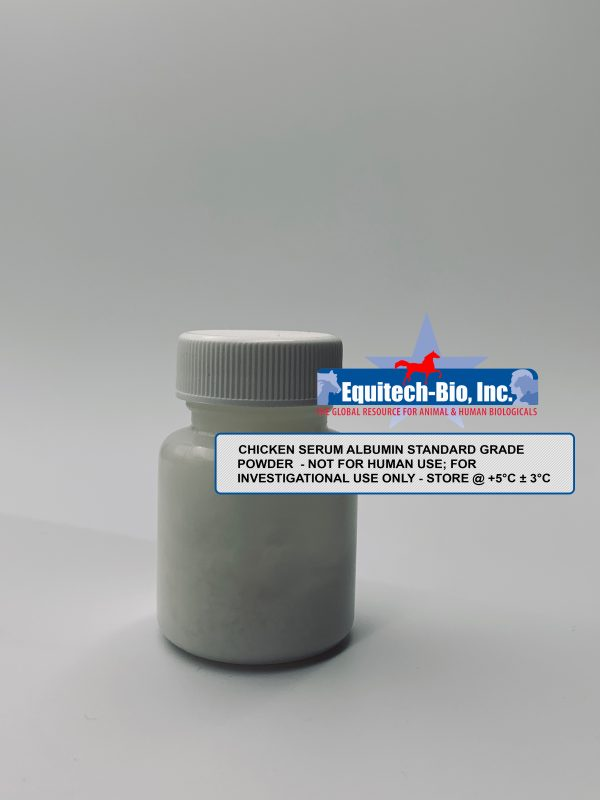
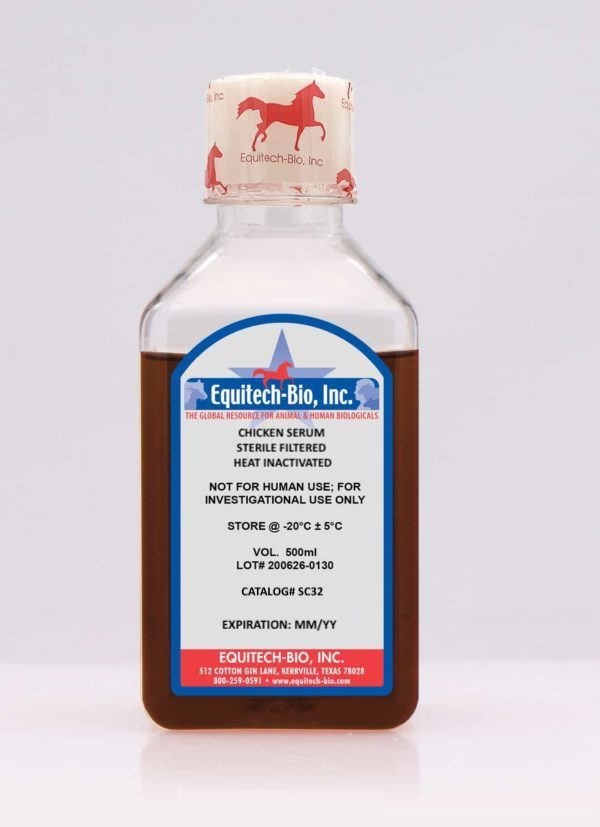
For research applications requiring chicken-derived biological materials, Equitech-Bio, Inc. supplies chicken albumin as purified chicken serum albumin, a serum-derived preparation that is distinct from egg-derived ovalbumin.
Researchers working with chicken-derived immunological reagents may also require chicken IgY, the avian immunoglobulin class that accumulates in egg yolk and is used in immunoassay development, antibody production, and as a co-precipitant in RIA methods.
Equitech-Bio supplies chicken IgY at greater than 97% purity, confirmed by SDS-PAGE, in lyophilized format for analytical and assay work.
Limitations and Safety Considerations for Chicken Egg Albumin
- Allergen status: Egg is classified as a major food allergen under food safety frameworks in multiple jurisdictions, including the US FALCPA and EU Regulation 1169/2011. Ovalbumin and ovomucoid are the primary IgE-binding proteins in egg white. Laboratories handling these preparations should observe relevant institutional biosafety protocols, and food manufacturers must satisfy mandatory allergen labeling requirements.
- Microbial risk: Raw and minimally processed egg-derived materials carry microbiological risk from Salmonella and related pathogens. Commercially produced, food-grade dried egg albumin is subject to pasteurization requirements. Research-grade preparations should be sterility-confirmed or processed under conditions appropriate to the specific application.
- Application mismatch: Food-grade egg albumin does not provide the purity documentation, lot traceability, or validated performance data required for research assay use. Research-grade ovalbumin, conversely, are not positioned, labeled, or regulated for food use. Treating either material as a direct substitute for the other, without independent validation, risks both experimental integrity and regulatory compliance.
Conclusion
Chicken egg albumin serves real purposes across both research and food science, but fitness for use in one context does not automatically extend to the other. Laboratory use demands defined purity, documented lot performance, and an application-appropriate grade. Food science uses demand functional performance under processing conditions, food safety compliance, and allergen documentation. Material selection must reflect the specific regulatory and technical demands of the application at hand.
For researchers sourcing chicken-derived biological reagents, Equitech-Bio supplies chicken serum and related products manufactured under USDA oversight and ISO 13485:2016-certified processes, with full lot traceability and certificate-of-analysis documentation for every product.
Frequently Asked Questions About Chicken Egg Albumin
Can food-grade egg albumin be used in lab assays?
Not without additional validation. Food-grade egg albumin lacks the purity documentation, lot-specific certificates of analysis, and validated performance data that research assay applications require.
How should chicken egg albumin be stored?
Dried preparations should be stored sealed and away from moisture at temperatures specified in the supplier's certificate of analysis. Reconstituted solutions should be used promptly or refrigerated. Repeated freeze-thaw cycles degrade functional performance.
What grade of chicken egg albumin is best for research?
The appropriate grade depends on the application. Immunological model antigen work typically requires purified ovalbumin with defined purity by SDS-PAGE. Cell-based assays require endotoxin specifications. Confirming grade requirements against the specific assay protocol before procurement is the reliable approach.
 English
 Arabic